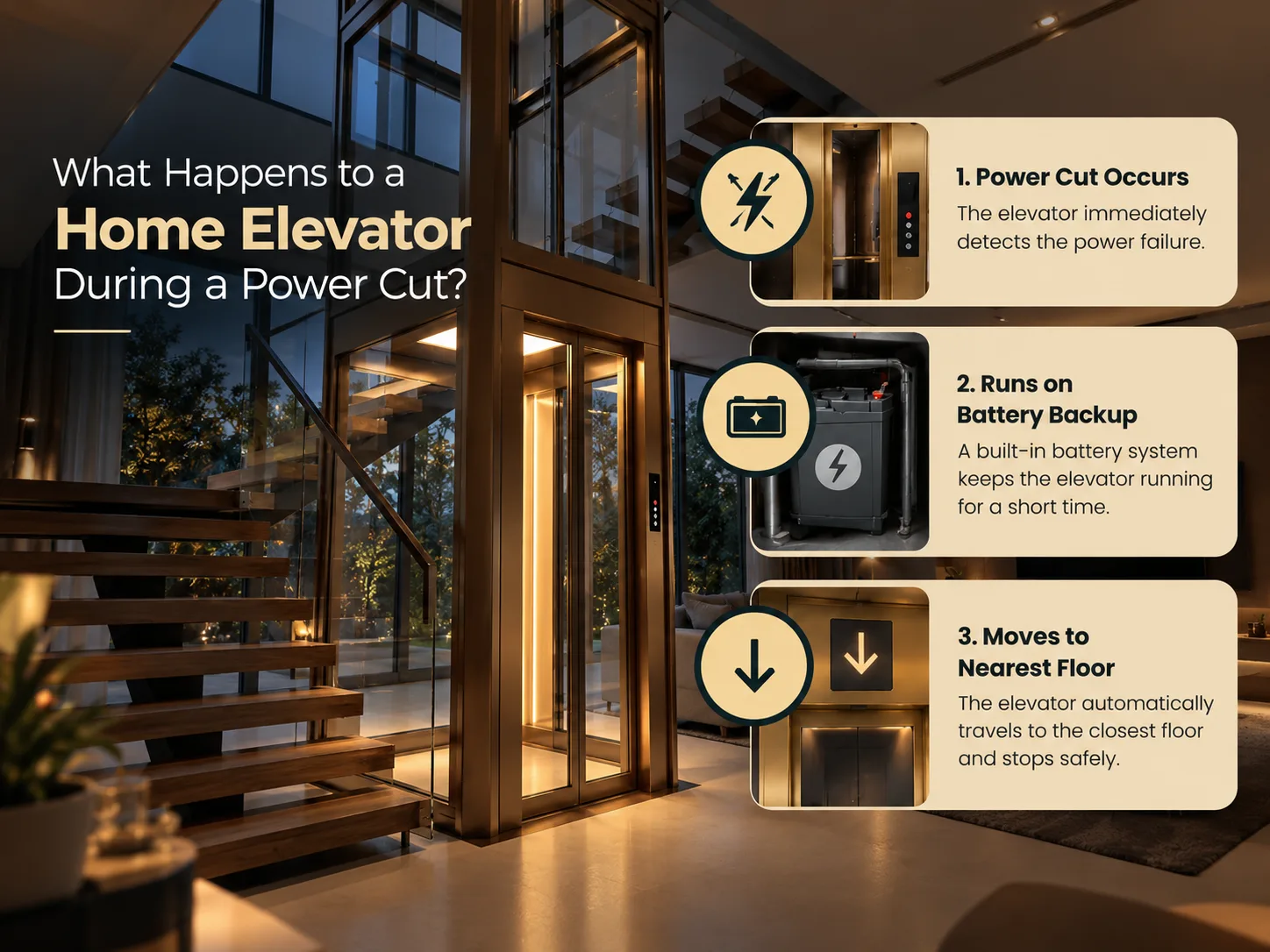
Power cuts can happen at any time, and one of the first concerns for homeowners is what happens if someone is using the elevator at that moment.
This is where home elevator safety becomes important.
Modern elevators are designed with emergency systems that can support passengers during a power failure. Depending on the model, features such as battery backup, Automatic Rescue Device, emergency lighting, alarms and rescue systems can help the elevator respond safely.
At Brio Elevators, power-cut protection is considered an important part of the overall elevator safety system.
In this blog, we explain what happens to a home elevator during a power cut, how emergency systems work and what homeowners should check before choosing an elevator.
No.
A properly designed elevator does not simply fall because the electricity goes off.
Elevators use braking and safety systems that help control the cabin when power is lost.
During a power failure, the normal journey may stop. The emergency system can then respond depending on the elevator model.
This is why choosing safe elevators with proper backup and rescue features is important.
Imagine you are travelling between floors and suddenly there is a power cut.
In a modern home elevator, the normal electrical supply stops.
The next action depends on the safety system provided in that particular elevator.
The elevator may:
The exact process can vary depending on the elevator model and technology.
An Automatic Rescue Device, commonly called an ARD, is an important power-failure safety feature.
When the main electricity supply fails, the ARD can use backup power to help move the elevator cabin to a suitable floor.
Once the cabin reaches the landing, the system can allow the passenger to exit according to the elevator design.
The main purpose of an ARD is simple:
To help passengers leave the elevator safely during a power failure.
When choosing a home elevator, homeowners should always ask how the rescue system works.
Many modern elevators use some form of backup power for emergency functions.
Depending on the system, battery backup can support features such as:
Battery backup is not designed to run the elevator normally for a long time.
Its main purpose is to support important emergency functions until the passenger can safely leave the lift.
Being inside a completely dark elevator during a power cut can be uncomfortable.
This is why emergency lighting is important.
Depending on the selected elevator system, backup power can keep emergency lights working inside the cabin for a certain period.
This allows passengers to:
Good home elevator safety should consider the passenger's comfort as well as mechanical protection.
Door operation during a power failure depends on the elevator system.
If the elevator reaches a safe landing through its emergency rescue system, the doors may be opened according to the design of that elevator.
The important point is that passengers should not try to force the doors open while the cabin is between floors.
The correct process is to allow the elevator's safety system or trained service personnel to handle the situation.
If the elevator stops between floors, passengers should remain inside and use the available emergency systems.
Depending on the elevator model, these can include:
Passengers should avoid trying to climb out or force the doors open.
A proper rescue procedure should always be followed.
This is one reason professional installation and service support are important for safe elevators.
Usually, emergency battery systems are not meant for normal elevator use.
Their main purpose is rescue.
For example, the battery may provide enough power to:
After the rescue is complete, the elevator normally waits until regular power is restored.
Once normal power is restored, the elevator system can return to normal operation after completing the required checks.
Depending on the system, this may happen automatically or may require a proper reset.
If the elevator behaves unusually after a power failure, homeowners should contact the service team instead of repeatedly trying to operate it.
Power interruptions can happen unexpectedly.
For families living in multi-floor villas or independent houses, a home elevator may be used by:
For these users, getting stuck without a proper emergency system can be stressful.
This is why power-failure protection should be checked before buying an elevator, not after installation.
Senior citizens may feel more uncomfortable if an elevator suddenly stops.
They may also find it difficult to use stairs if the elevator cannot continue operating.
A well-planned emergency system can make the situation easier by helping the lift reach a safe landing.
When selecting a home elevator for elderly family members, homeowners should ask:
These simple questions are very important.
Even with automatic rescue systems, there should be a proper procedure for manual rescue if required.
Manual rescue should only be carried out by trained people following the correct procedure.
Homeowners and passengers should not try to perform technical rescue themselves.
The elevator company should explain:
Good safety is not only about equipment. It also depends on having a clear rescue process.
When comparing modern elevators, ask about the complete emergency system.
Important areas include:
Not every model will have exactly the same system.
Always ask the elevator company to explain what is included in the exact model you are buying.
Even the best safety system needs regular checking.
For example, backup batteries can lose performance over time.
During maintenance, technicians may check areas such as:
Regular servicing helps make sure these systems are ready when they are actually needed.
A safety feature is useful only when it is properly maintained.
Some homeowners use a generator or another backup power source for their house.
Whether an elevator can work with a particular backup power system depends on its electrical requirements.
Do not connect an elevator to a generator or UPS without checking with the elevator company.
The technical team should confirm:
Using the wrong power source can create unnecessary problems.
At Brio Elevators, safety is not only about normal elevator movement.
The elevator should also have a clear response when something unexpected happens.
Depending on the selected model and configuration, Brio home elevators can include emergency systems such as:
The exact safety features can vary between models.
That is why the Brio team explains the relevant safety systems during the elevator selection and installation process.
The aim is to help families understand what the elevator will do during a power failure, rather than simply giving them a list of technical features.
If the elevator stops during a power cut:
The most important thing is to avoid attempting to exit when the cabin is not properly aligned with a floor.
Before selecting a home elevator, ask:
These questions can help you understand the real safety of the elevator.
An elevator may work perfectly every day, but true safety is also about what happens when conditions are not normal.
A good home elevator should be prepared for situations such as:
This is why home elevator safety should always include emergency planning.
A power cut does not mean a home elevator becomes unsafe immediately.
Modern elevator systems can use backup and rescue features to help protect passengers and bring the cabin to a safe position.
At Brio Elevators, power-cut safety is an important part of planning a residential elevator.
Depending on the model, systems such as Automatic Rescue Device, battery backup, emergency lighting, alarms and rescue arrangements can help make the experience safer and less stressful.
Before buying a home elevator, always ask one simple question:
“What exactly will this elevator do if the power goes off?”
A clear answer will help you choose a safer and more reliable elevator for your family.
📞 Call: +91 9398113939 🌐 Visit: brioelevators.com
No, a properly designed elevator uses braking and safety systems to control the cabin when power is lost.
An Automatic Rescue Device can use backup power to help bring the elevator to a suitable landing during a power failure.
Usually, backup power is mainly intended for emergency rescue and safety functions rather than normal long-term operation.
Stay inside, use the emergency communication system if needed and do not force the doors open.
Maintenance helps check that batteries, rescue systems, emergency lights and alarms are ready to work when required.

