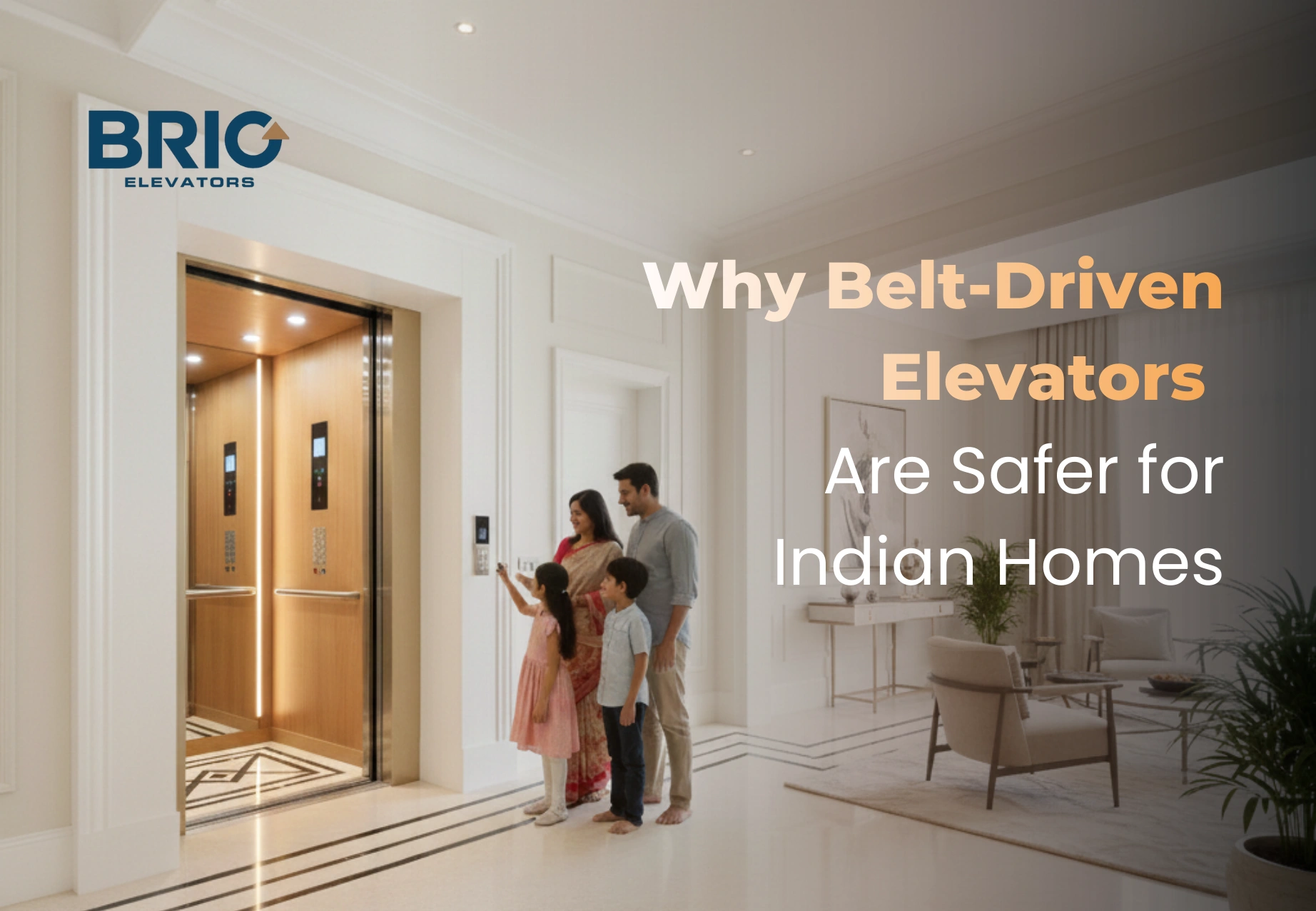
When you think about your home, you think about comfort. But above everything else, you think about safety, especially when it comes to your family. Whether it's elderly parents, young children, or even guests visiting often, you want every part of your home to feel secure. And as home elevators become increasingly common in Indian households, one question has started standing out: Which type of elevator is the safest for my home?
This is where belt-driven home elevators have emerged as the most trusted solution. They’re quieter, smoother, and packed with safety features that traditional rope-based elevators simply can’t match.
If you're planning to install a lift or upgrade your old one, this guide will help you understand why belt-driven systems are now the preferred choice for Indian homes.
Most of us grew up seeing rope elevators in malls, apartments, or offices. But home elevators are built differently, because a home is a much more delicate environment. That’s where belt-driven technology steps in.
A belt-driven elevator uses a grooved belt lift mechanism instead of steel ropes. These belts are made of polyurethane with steel reinforcement, which gives them superior strength and long-lasting durability.
Here is what's peculiar about them:
They don't stretch or fray like rope does.
That means, in simple terms, belts give you a safer, smoother, and far more stable ride experience, something that every home needs.
Safety is a strong point of belt systems. Modern Indian families desire technology that is dependable, simple to operate, and can protect their family members all the time.
Here are the most significant safety features of belt elevators in India and why house owners have trusted them.
The grooved multi-layered belt:
The belt itself is a big safety enhancement, tending to grip firmly and strongly support the load. This is opposed to ropes, which can actually wear away over time in progressive decrementation; belts remain stable over years of continued use.
Speed Governor:
It is a guardian-like system.
In case the elevator ever exceeds the allowable speed, the governor acts immediately and brings it down to speed. No panics, no losing control.
ARD - Automatic Rescue Device
Power cuts-the one thing that practically every Indian household knows all too well.
ARD ensures that even if the power goes off, the elevator safely moves to the nearest floor and opens the doors automatically. This single feature alone brings tremendous peace of mind.
Leveling - Correctly
A little jerky stop will put one in great jeopardy, especially the seniors.
Belt-driven elevators provide perfect floor leveling every time, hence making entry and exit completely safe.
Smart Door Sensors
If anything-or anyone-comes near the door while it's closing, the sensors immediately reopen it.
No risk whatsoever. No last-minute rush. No unexpected closures.
Smooth and soft road behavior
Jerks or jerky movements frighten the passengers. The belts remove these effects and provide soft acceleration and smooth deceleration.
Fire-resistant elements
Brio incorporates fire-resistant wiring, alarm systems for emergencies, and communication systems that ensure full preparedness in case of emergencies.
When these features work together, your lift becomes more than just a convenience it becomes a safe home lift. Indian families can fully rely on.
Indian homes have their own special needs. We do not always enjoy big shafts and extra space, we would want silent operation, since most of the time rooms and lift shafts are in pretty proximity with each other. Above all, low maintenance because household schedules are busy enough already.
Obviously, belt-driven elevators meet all these requirements.
Perfect for space limitation
They work beautifully in:
Whisper-quiet operation
Low Maintenance
Energy Efficiency
Imestions: Long Life
Here is a quick and direct comparison that would help homeowners decide correctly:
|
Feature |
Belt-Driven Lift |
Elevator Rope |
|
Safety |
Very High |
Moderate |
|
Noise Level |
Ultra Silent |
Noticeable |
|
Strength |
Durable |
Wears out sooner |
|
Maintenance |
Low |
Constant care |
|
Pit/Headroom |
Very few |
Requires more space |
|
Smootheness |
Very smooth |
Average |
|
Lifespan |
Longer |
Shorter |
|
Energy Consumption |
Lower |
Higher |
It’s easy to see why more and more Indian homes are shifting to belt-driven systems, they simply match modern expectations better.
You can have advanced technology, but unless it’s engineered and installed with precision, it won’t perform at its best. That is where the Brio Elevators excel.
Brio doesn’t just install lifts, we design solutions specifically for Indian home conditions. Every detail is designed around safety, comfort, and long-term reliability.
Highest Quality Grooved Belt Technology
Silent, vibration-free rides
Reliable After-sales Service
Conclusion
Your home is your sanctuary. And when you bring an elevator into that space, you want nothing short of the best protection. Belt-driven home elevators offer exactly that superior safety, smoother rides, quieter operation, and lasting reliability. In a world where home design is evolving, belt-driven technology ensures that Indian families can enjoy comfort without ever compromising on safety. And with Brio Elevators, this experience becomes even more refined, dependable, and future-ready.
FAQS
1. Are belt-driven elevators safer than rope elevators?
Yes. Belt-driven lifts use reinforced belts that don’t fray or rust, offering smoother, safer, and more reliable performance than rope systems.
2. How long does a belt-driven elevator last?
They have a long lifespan often 15–20 years because the belts don’t wear out easily and require minimal upkeep.
3. Do belt-driven elevators need a lot of maintenance?
No. They require very low maintenance since the belts operate without lubrication and stay clean and durable.
4. Can belt-driven elevators fit into small homes?
Yes. They work well in homes with low headroom, minimal pit space, and compact layouts, making them ideal for Indian houses.
5. Why choose Brio Elevators for a belt-driven lift?
Brio provides European-grade belt technology, top-tier safety features, smooth rides, and reliable after-sales support perfect for families