Living in a small home teaches you one thing very quickly space matters. Every corner is planned for a reason. Every addition has to justify its place. When such homes have more than one floor, stairs become unavoidable. At first, this feels normal. Over time, it doesn’t.
This is where space-saving home elevators quietly change how a home is used. They are not about luxury or showing off. They are about making everyday movement easier without taking away precious living space.
Many homeowners only realise the value of an elevator after they start needing it. By then, planning becomes harder. Installing the right solution early often makes life much simpler later.
Stairs work fine until they don’t. Carrying groceries, moving furniture, managing injuries, or helping ageing parents up and down floors can slowly turn into daily stress. In compact homes, there is rarely room to add ramps or redesign staircases.
Adding space-saving home elevators removes this limitation altogether. Movement between floors becomes smooth and predictable. Every part of the house stays usable, no matter who is using it.
This change may seem small on paper, but in daily life, it makes a noticeable difference.
Traditional elevators were never meant for compact residences. They require deep pits, bulky shafts, and separate machine rooms. For most small homes, this kind of construction simply doesn’t make sense.
Modern residential systems work differently. They are designed to adapt to the house, not the other way around. Because of this approach, space-saving home elevators can be installed in homes where a conventional lift would never fit.
That flexibility is what makes them practical rather than intrusive.
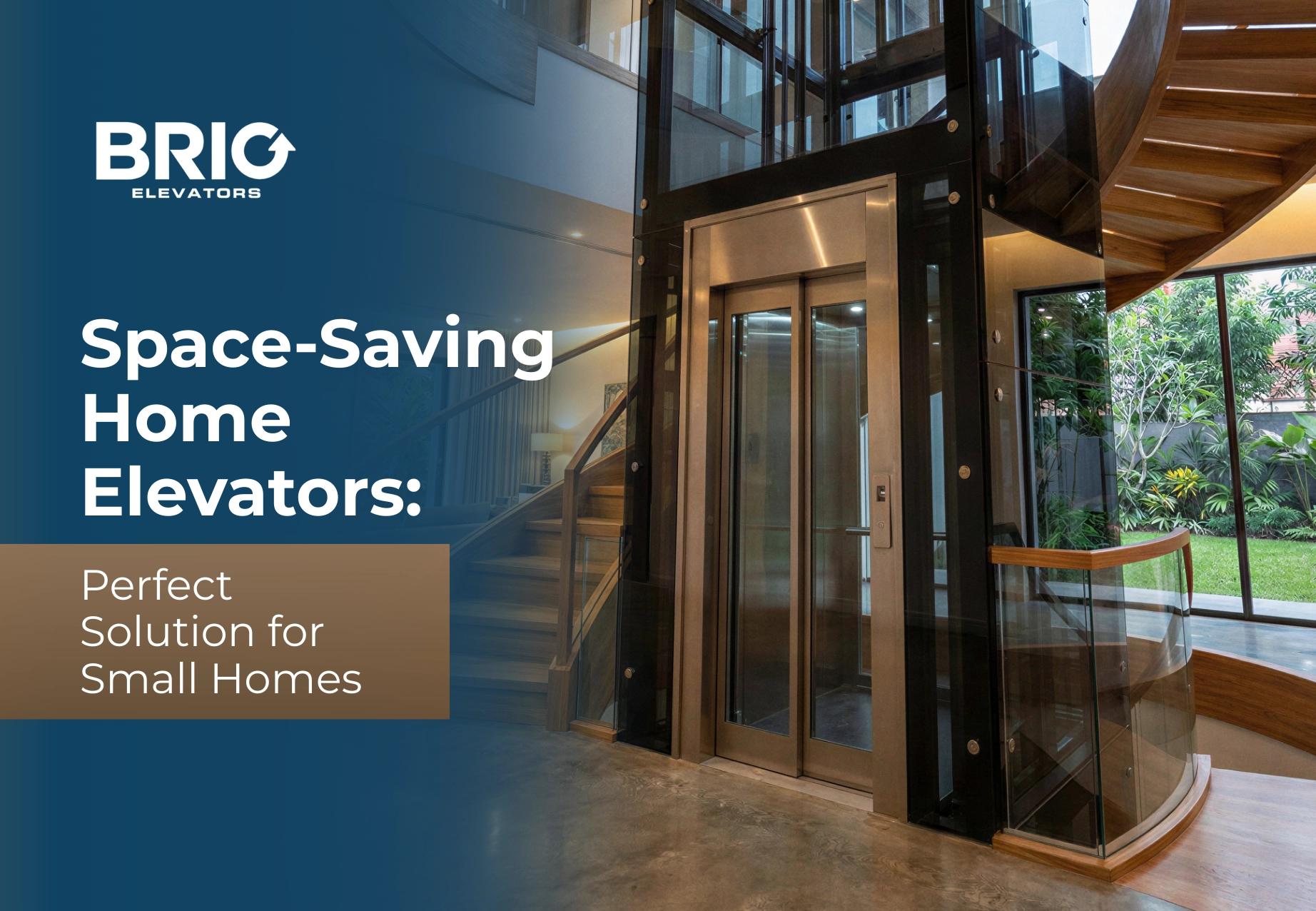
Homeowners often worry about how an elevator will look inside their home. No one wants a heavy, industrial structure sitting in the middle of a living space. This is where thoughtful small home lift design becomes important.
Today’s designs focus on clean lines, compact cabins, and neutral finishes. Glass panels are commonly used to avoid a boxed-in feeling. The goal is simple—the elevator should feel like it belongs there.
In smaller homes, subtle design choices matter more than people expect.
The engineering behind compact home elevators is what allows them to fit into tight spaces. Advanced drive systems reduce the need for large mechanical setups while still offering stable performance.
These elevators work well in:
Despite their size, they are built for regular use. The ride remains smooth, and noise levels stay low, which matters a lot in residential environments.
Modern homes, especially villas, are increasingly vertical. Land constraints and design trends have made multi-level living common. Because of this, elevators for villas are now part of early planning rather than last-minute additions.
At the same time, lifts for small houses serve homes that are compact but still multi-storeyed. These systems can be installed indoors or externally, depending on layout limitations, giving homeowners more flexibility than before.
Residential elevators are built for family use. That means safety features are designed around real-life situations, not commercial traffic.
Most systems include emergency stop buttons, power backup, smooth acceleration, and secure door locking. These features ensure reliable operation even during unexpected power cuts or interruptions.
For families with children or elderly members, this reliability provides peace of mind.
One of the quieter benefits of space-saving home elevators is efficiency. They consume relatively low power compared to traditional systems, making them suitable for everyday use.
Maintenance is also straightforward. With fewer heavy mechanical parts, servicing is simpler and more predictable. Over time, this reduces ownership stress and unexpected costs.
Homeowners often assume installing an elevator means months of construction. In reality, many lifts for small houses can be installed with minimal civil work.
This usually results in:
For occupied homes, this makes the decision far easier.
Installing an elevator is not only about current convenience. It is also about planning for future comfort. As needs change, having easier access between floors allows families to continue using their home without compromise.
Homes that include elevators for villas or compact lift systems tend to be more adaptable over time. This flexibility often adds to long-term property appeal as well.
Small homes require smart choices. With modern engineering and thoughtful design, space-saving home elevators offer a realistic way to improve movement without sacrificing space.
They fit into compact layouts, support daily living, and prepare homes for future needs all without unnecessary complexity.
Considering an elevator for your home?
Explore residential elevator solutions designed for small houses and villas. Speak with Brio experts to find an option that works for your layout and lifestyle.
1. Can a home elevator be installed in an existing small home?
Yes, many systems are designed for installation with minimal structural changes.
2. How much space is needed for compact home elevators?
They require significantly less space than traditional elevator setups.
3. Are residential elevators safe for daily use?
Yes, they are built specifically for regular family use.
4. Can the design be customised?
Yes, finishes and cabin styles can be adapted to suit the interior.
5. Do elevators increase long-term usability of a home?
Yes, they make multi-level living more comfortable over time.