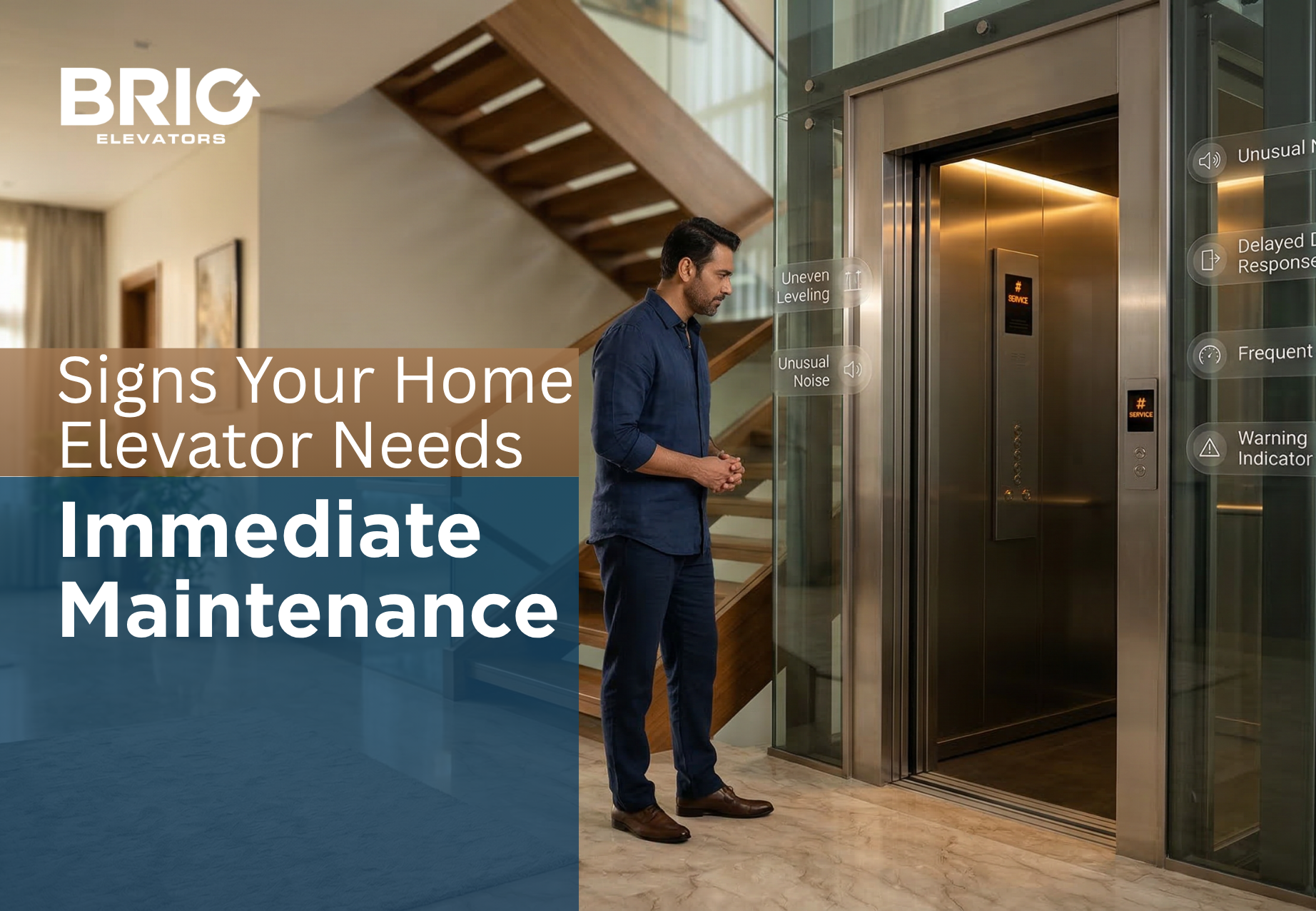
Most people don’t really think about their home elevator until something feels a little off.
It’s usually not a big, obvious problem. It starts small. A sound you haven’t heard before. A slight delay. A ride that doesn’t feel as smooth as it used to.
At first, it’s easy to ignore.
But in many cases, these are early elevator maintenance signs. And catching them early can save you from bigger headaches later both in terms of cost and safety.
Let’s go through the kind of changes you shouldn’t brush aside.
You get used to the normal sound of your elevator without even realizing it.
So when a new noise shows up a faint squeak, a slight grinding sound, or even a soft vibration it stands out. Even if it’s not loud, it’s different.
A lot of people ignore this stage because everything still “works.” But these sounds usually mean something inside is starting to wear out.
If left alone, they can slowly turn into bigger residential lift problems that are much harder to deal with later.
Sometimes, nothing looks wrong but it doesn’t feel right.
Maybe the elevator takes a second longer to start. Maybe there’s a small jerk during movement. Or it just doesn’t glide the way it used to.
These changes are easy to overlook because they don’t stop you from using the elevator.
But they’re actually common elevator fault symptoms, and they usually mean the system isn’t running as smoothly as it should. A timely home elevator repair can often sort this out before it gets worse.
Doors are something you interact with every single time.
So even a small change is noticeable. Maybe they pause before opening. Maybe they close slower than usual , Or they don’t align quite the way they used to.
It might seem like a minor issue, but door behavior is one of the clearest lift servicing indicators. Ignoring it can eventually affect both safety and convenience.
If you’ve had to reset your elevator once, it’s worth noting.
If you’ve had to do it more than once, it’s definitely not something to ignore.
Frequent stops or shutdowns are strong elevator maintenance signs that something deeper is going on. The system might recover temporarily, but the underlying issue is still there.
This is usually the point where proper home elevator repair becomes necessary.
A smooth ride is something you expect without thinking about it.
So when you suddenly feel slight shaking or vibrations, it feels unusual right away.
It may not seem serious at first, but it often points to internal wear or alignment issues. These subtle elevator fault symptoms tend to get worse if left unchecked.
This is one of those signs people don’t immediately connect to the elevator.
If your electricity usage has gone up without any clear reason, your elevator might be working harder than it should.
When components aren’t functioning efficiently, they use more power. This makes it one of those hidden lift servicing indicators that’s easy to miss.
You press the button and there’s a pause.
Even if it’s just a second or two, it feels different because you’re used to an instant response.
This kind of delay often points to control system or wiring issues. These are early elevator maintenance signs that are much easier to fix when caught early.
At first, it might just be a small difference.
But if your elevator stops slightly above or below the floor level, it becomes more noticeable and more risky.
This is one of the more serious residential lift problems, especially in homes where safety matters even more. It usually needs a quick adjustment, but it shouldn’t be delayed.
This is one sign you shouldn’t wait on.
If you ever notice a burning smell or unusual heat, it could mean electrical components are overheating.
Among all elevator maintenance signs, this is one of the most urgent. It’s best to stop using the elevator and call a professional immediately.
Modern elevators are designed to alert you before something goes wrong.
So if you see warning lights or error messages, they’re there for a reason. These are built-in elevator maintenance signs that shouldn’t be ignored.
Getting them checked early can prevent bigger issues later.
It’s easy to ignore small things especially when the elevator still works. But most major problems don’t happen suddenly. They build up slowly over time.
By paying attention to elevator maintenance signs, you can:
It’s really about staying one step ahead.
When It’s Time to Get Help:
If something feels different, it’s worth checking.You don’t need to wait for a complete failure. In fact, acting early is what helps you avoid that situation.
Whether it’s a small fix or a full home elevator repair, getting professional help early keeps things simple.
Your home elevator is designed to make daily life easier but, it still needs attention to keep doing that.
The good thing is, it usually gives you enough warning before something goes wrong.
From small sounds to slight delays, these are all early elevator maintenance signs. Noticing them early helps you avoid bigger issues and keeps everything running smoothly.
Don’t Wait Until It Breaks Down
A small issue today can turn into a major repair tomorrow.
Book a maintenance check now and keep your elevator running without interruptions.
Contact our Brio experts today for quick, reliable, and stress-free service.
Most home elevators should be serviced every 6–12 months.
Uneven leveling, door issues, unusual noises, and jerky movement are common.
It’s better not to. Small issues often lead to bigger problems over time.
If you notice delays, vibrations, or repeated breakdowns, it’s time to call a professional.
Not always, but they should never be ignored as they can lead to safety risks.