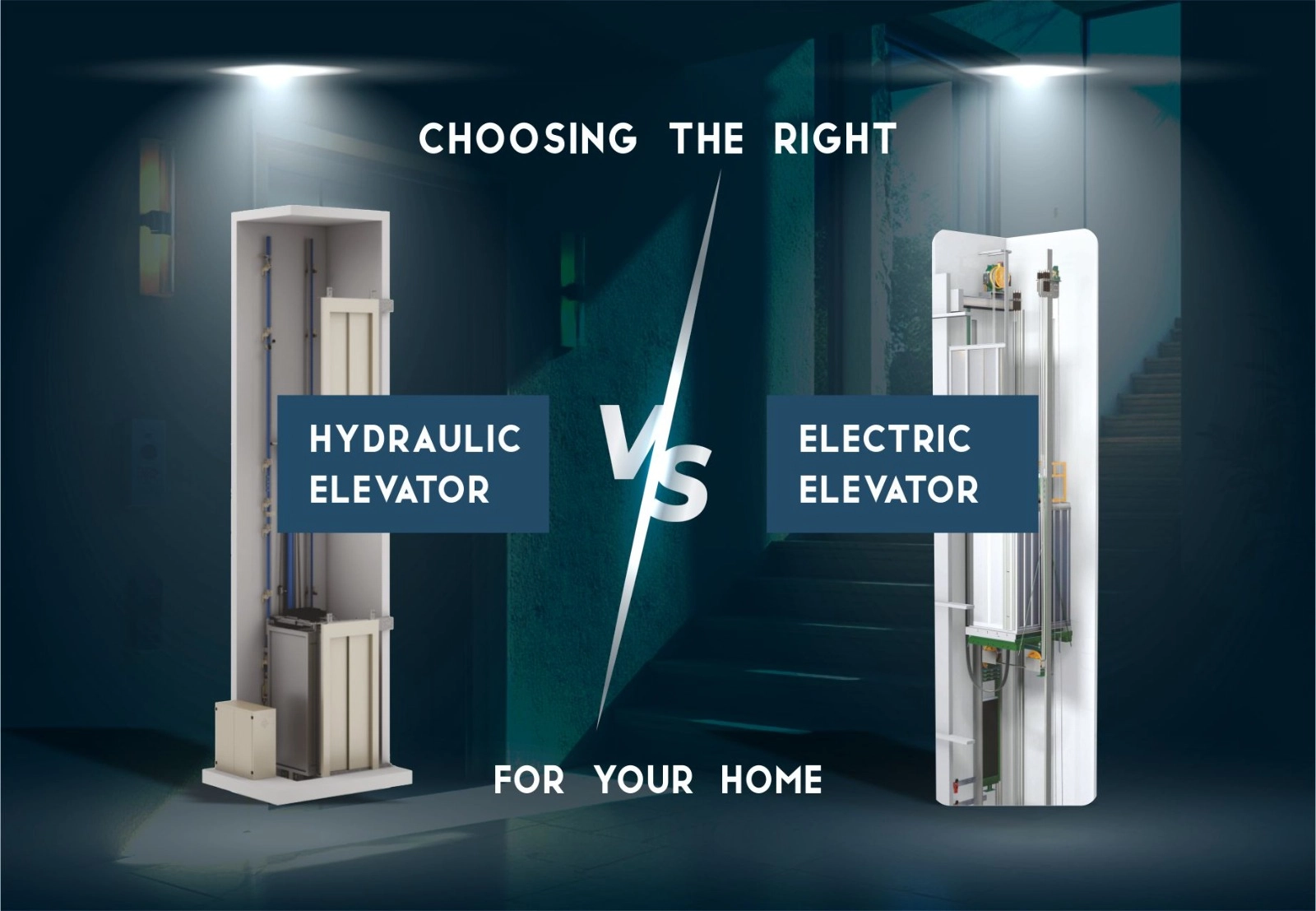
In modern Indian homes, elevators are no longer just about luxury—they’re about comfort, safety, and accessibility. Whether it’s making life easier for elderly parents or simply adding convenience for multi-storey living, home elevators are becoming a necessity.
But when it comes to selecting the right one, most homeowners face a common question:
“Should I choose a hydraulic lift for home or an electric lift?”
Both types have their own strengths, and the choice depends on your space, budget, and lifestyle. Let’s break it down step by step.
Most homeowners get confused because elevator companies showcase multiple options without simplifying the comparison. Technical terms like pistons, counterweights, gearless motors, and hydraulic fluid can feel overwhelming.
What you really need is a clear, human-friendly comparison of hydraulic vs. electric lifts for home use.
Let’s first understand the basics of each lift type.
Here’s how they differ in real-life scenarios:
When you’re investing in a home elevator, the decision is about long-term comfort, safety, and value. Here’s how understanding the differences helps you:
✔If you live in a compact house with 2–3 floors, a hydraulic lift for home may be the best fit.
✔ If you’re building a luxury villa with 4+ floors, an electric lift in India could be ideal.
✔ If you want a budget-friendly option with smooth rides, hydraulic lifts win.
✔ If your priority is speed, modern tech, and lower energy bills, electric lifts are better.
A family in Hyderabad wanted to install a lift in their existing 2-storey home. Since they had limited space and didn’t want heavy structural changes, they opted for a hydraulic lift. It fit perfectly, was cost-effective, and provided a quiet ride for their elderly parents.
Meanwhile, a villa owner in Bangalore building a 4-floor luxury home chose a gearless electric lift. It offered faster rides, stylish cabin options, and long-term energy savings.
Different homes, different choices—but both families found the right fit for their needs.
There’s no one-size-fits-all answer. The choice between a hydraulic lift for home and an electric lift depends on your home design, budget, and lifestyle.
Either way, a home elevator is not just about convenience—it’s about adding safety, comfort, and value to your home.
Your home deserves more than just convenience—it deserves the right elevator solution. Whether it’s hydraulic or electric, choose a lift that fits your lifestyle, your budget, and your family’s needs.
Explore Home Elevator Options Today
Q1. Which is better for homes in India: hydraulic or electric lifts?
It depends on your requirements. Hydraulic lifts are ideal for compact homes and retrofits, while electric lifts are better suited for larger houses or villas with more floors.
Q2. Are hydraulic lifts cheaper than electric lifts?
Yes, hydraulic lifts are generally more affordable upfront, while electric lifts may cost more but offer long-term savings in energy efficiency and durability.
Q3. Do hydraulic lifts consume more electricity than electric lifts?
Hydraulic lifts consume power mainly during upward movement, while electric lifts use power both ways but with more efficient systems. Advanced electric lifts often have lower energy consumption in the long run.
Q4. Which type of lift is safer for residential use?
Both hydraulic and electric lifts are very safe when installed and maintained properly. Hydraulic lifts have safety valves, while electric lifts feature multiple braking systems and emergency options.
Q5. Can I install a lift in an existing house?
Yes, hydraulic lifts are easier to retrofit in existing homes due to their compact size and low overhead requirements.
Q6. Which lift is quieter—hydraulic or electric?
Hydraulic lifts are generally quieter and smoother, while electric lifts may produce slight noise from ropes and motors, although modern models are much quieter than before.
Q7. How many floors can hydraulic lifts handle?
Hydraulic lifts are best for 2–3 floors in residential homes. For 4 or more floors, electric lifts are usually the better option.
Q8. What is the maintenance difference between hydraulic and electric lifts?
Hydraulic lifts require regular oil changes and inspections, while electric lifts need motor and rope checks. Both need periodic professional servicing.
Q9. Which lift type adds more value to a property?
Both add significant value, but electric lifts are often preferred in luxury homes due to their modern features and speed. Hydraulic lifts, however, are seen as practical and cost-efficient.
Q10. Are hydraulic lifts safe during power cuts?
Yes, hydraulic lifts come with emergency lowering systems, allowing the cabin to safely descend in case of a power failure.
Q11. Do electric lifts need more space than hydraulic lifts?
Yes, electric lifts often require additional headroom or a machine room, while hydraulic lifts need less space and can fit into compact shafts.
Q12. Which lift type is best for elderly family members?
Both are safe and convenient, but hydraulic lifts are often preferred for homes with elderly residents because of their smooth, gentle movement.