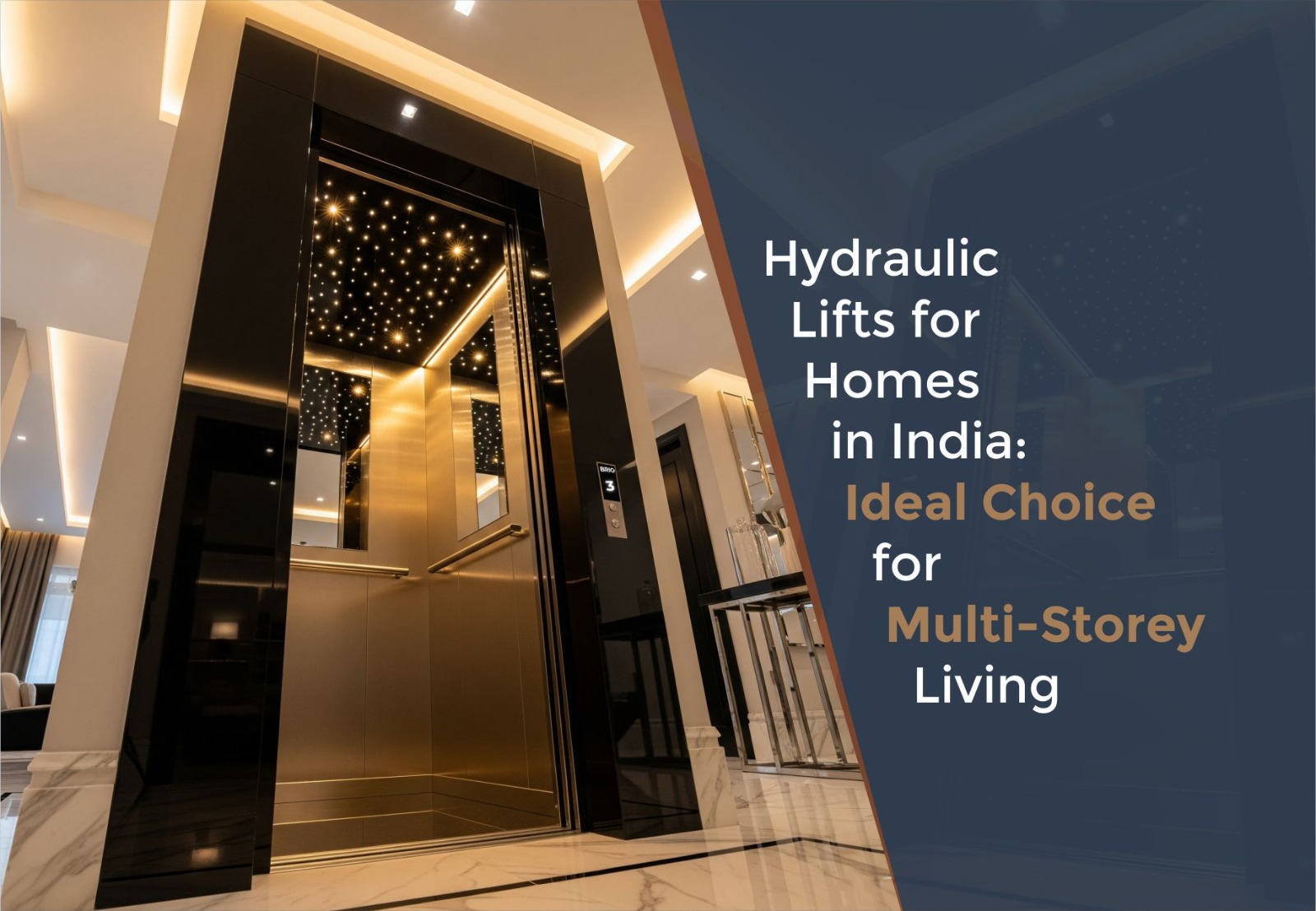
The Problem: Stairs Aren’t Always the Best Solution
Living in a multi-storey home comes with its own challenges. While stairs may seem manageable at first, they quickly become a problem for elderly parents, young children, or anyone carrying heavy loads like groceries, furniture, or luggage.
For families in India, where homes are often vertical and compact, the need for a safe, efficient, and affordable solution is stronger than ever. That’s where hydraulic home elevators step in.
The Solution: Hydraulic Lift for Home
A hydraulic lift for home is one of the most practical elevator solutions available today. Unlike traditional rope-based systems, hydraulic lifts operate using a hydraulic cylinder and piston mechanism. This makes them simple, compact, and reliable—ideal for residential use.
Hydraulic lifts have been widely used around the world and are now gaining popularity in India due to their cost-effectiveness, space efficiency, and safety features.
How Does a Hydraulic Lift Work?
The working principle of a hydraulic home elevator is both simple and efficient:
Because of this design, hydraulic lifts are known for their smooth rides, quiet operation, and easy maintenance.
Why Hydraulic Lifts are Ideal for Indian Homes
Hydraulic lifts don’t need a deep pit or massive overhead room. They fit comfortably in smaller homes, duplexes, and villas without demanding major civil modifications.
For families with children and seniors, safety is always assured.
Hydraulic lifts are generally more affordable to install compared to traction lifts. They also have lower maintenance requirements, making them budget-friendly in the long run.
Unlike older lifts that make noise, hydraulic home elevators operate almost silently. This makes them perfect for peaceful residential environments.
From glass panels to designer cabins, hydraulic lifts can be customized to suit your interiors. They’re not just functional—they can add a touch of elegance to your home.
Whether it’s a 2-storey duplex or a 4-level villa, hydraulic lifts handle the vertical movement seamlessly. They’re designed for low to mid-rise homes, making them a smart fit for Indian households.
How It’s Useful for Families in India
Real-Life Example
Take the case of a family in Pune living in a 3-storey bungalow. The grandparents struggled with stairs, and the family needed a solution that was both affordable and reliable. By installing a hydraulic lift for home, they:
This is why more Indian families are turning to hydraulic home elevators—they combine practicality with comfort.
The Next Step for Your Home
Hydraulic lifts are not just about moving between floors—they’re about making life safer, simpler, and more stylish. With easy installation, compact designs, and reliable performance, they’re the perfect fit for multi-storey Indian homes.
If you’re looking to upgrade your everyday living, a hydraulic home elevator is the smart choice that brings comfort and convenience for years to come.
Q1. What is a hydraulic lift for homes?
A hydraulic lift is a type of residential elevator that operates using hydraulic fluid and a piston mechanism, making it smooth, safe, and efficient for multi-storey houses.
Q2. Are hydraulic home elevators safe?
Yes, hydraulic lifts are considered very safe. They come with safety valves, emergency lowering systems, and smooth braking mechanisms to ensure secure operation.
Q3. How much space is required to install a hydraulic lift in a house?
Hydraulic lifts usually require less space compared to traditional elevators. On average, they need a pit depth of around 200–300 mm and can be customized for compact homes.
Q4. What is the average cost of a hydraulic lift for homes in India?
The cost depends on factors like the number of floors, size, design, and brand. On average, prices may start from ₹6–8 lakhs and go higher based on customizations.
Q5. Do hydraulic lifts consume a lot of electricity?
No, hydraulic lifts are energy-efficient. Power is only required when the lift is moving upwards, while the downward movement uses gravity, saving energy.
Q6. Can hydraulic lifts be installed in existing houses?
Yes, hydraulic lifts are ideal for retrofitting in existing houses as they do not require large machine rooms and can fit into compact shafts.
Q7. How many people can a hydraulic home elevator carry?
Most residential hydraulic lifts have a capacity of 2–6 persons, depending on the model and customization.
Q8. What is the maintenance required for hydraulic home elevators?
Maintenance is relatively simple—regular oil checks, inspection of safety systems, and servicing every 6–12 months are usually sufficient.
Q9. Are hydraulic lifts noisy while operating?
No, modern hydraulic lifts are designed to run quietly with minimal vibration, ensuring a comfortable ride.
Q10. Why should families in India choose hydraulic lifts over other types?
Hydraulic lifts are cost-effective, require less space, easy to maintain, safe, and perfect for multi-storey living in Indian homes.