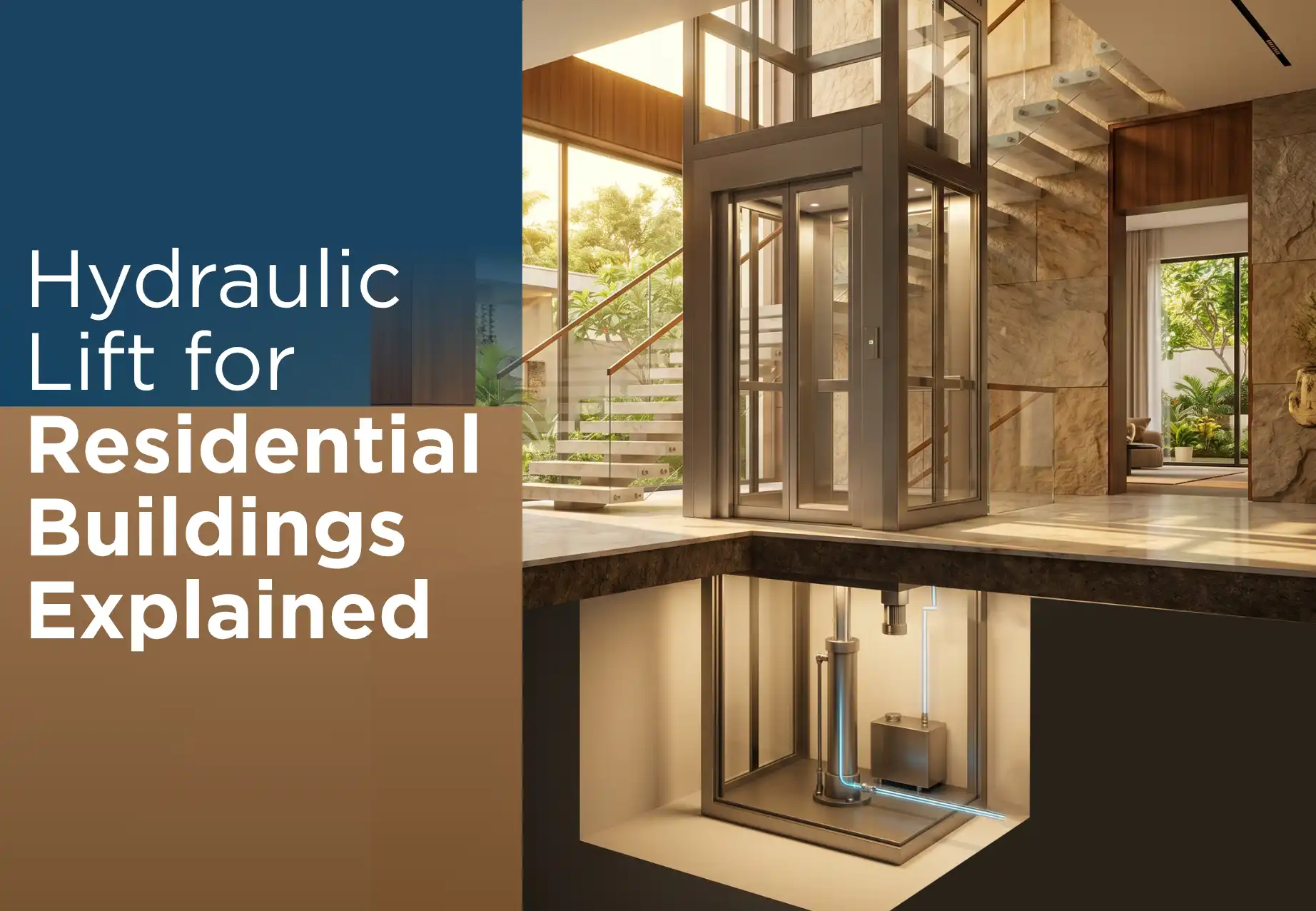
If you are planning to add a lift to your home, you may have already come across the term "hydraulic lift." It is one of the most common choices for homes today, especially for smaller buildings and independent houses. In this blog, we will explain what a hydraulic lift is, how it works, its benefits, and why so many homeowners prefer it.
A hydraulic lift is a type of elevator that moves up and down using a hydraulic system instead of ropes or cables. It works with the help of a piston, oil, and a pump. When the pump pushes oil into the piston, the lift moves up. When the oil flows back, the lift moves down slowly and smoothly.
This simple mechanism is one of the reasons hydraulic lifts have been trusted for many years, both in homes and small commercial buildings.
Understanding the working of a hydraulic lift for home helps you know why it suits residential buildings so well.
This process gives a very smooth and steady ride, without sudden jerks. That is one reason hydraulic lifts are often preferred by families with elderly members or young children.
Many homeowners across India, including those with independent houses and villas, prefer hydraulic lifts for a few clear reasons.
Smooth and comfortable ride: The oil-based system moves the cabin gently, without sudden stops or shakes. This makes it comfortable for elderly people and safe for children.
Good for low-rise buildings: Hydraulic lifts work very well in homes with two to four floors, which matches most independent houses and villas.
Simple and reliable technology The mechanism has been used for many years and is well understood by technicians, making repairs and servicing easier.
Quiet operation: Since there are no heavy cables or pulleys involved, hydraulic lifts tend to run quietly, which is useful if the lift is close to bedrooms or living spaces.
Strong lifting capacity: Hydraulic lifts can carry a good amount of weight, making them suitable even for slightly heavier loads like furniture or a wheelchair.
Here are the everyday benefits families notice after installing a hydraulic lift at home.
These benefits are why hydraulic lifts remain a popular and practical choice, especially for homes that are not extremely tall.
Not every home has a large area to dedicate to a lift, and that is where a small hydraulic lift for home becomes useful. These compact versions are designed for homes with limited space, without compromising on safety or comfort.
A small hydraulic lift usually needs:
This makes small hydraulic lifts a good option for homeowners who want a lift but are worried about space limitations.
Hydraulic lift installation is usually simpler compared to other elevator types, but it still requires proper planning. Here is what the process generally looks like.
A technical team visits your home to check the available space, shaft area, and structural details.
Based on the inspection, the company suggests the right lift size, capacity, and design to match your home.
Some basic construction work is done to prepare the shaft and pit area for the lift.
The hydraulic system, cabin, doors, and control panel are installed carefully by trained technicians.
Before handing over the lift, the team tests it thoroughly to make sure it runs smoothly and safely.
Most home installations are completed within a few weeks, depending on the complexity of the site and any customisation involved.
Before choosing a hydraulic lift, here are a few points every homeowner should check.
Taking care of these details early can save you a lot of confusion and cost later.
Like any equipment, a hydraulic lift needs regular care to keep working smoothly.
With proper maintenance, hydraulic lifts can serve a home reliably for many years.
Choosing the right lift is only half the job, choosing the right company to install and maintain it matters just as much. This is where Brio Elevators stands out.
Brio Elevators is known as India's first Indo-Italian home elevator brand, bringing together strong European engineering with elegant Italian design. For homeowners choosing a hydraulic lift, this combination means you get more than just a functional machine; you get a lift that performs reliably and looks like a natural part of your home.
Here's what makes Brio a dependable choice for hydraulic lifts:
Brio's hydraulic lifts follow proven European engineering practices, giving homeowners confidence in both safety and long-term performance.
The cabin finishes and interiors carry an Italian design touch, so the lift blends into your home rather than looking like a plain, functional add-on.
Features like emergency alarms, battery backup, and safety sensors come built-in, not offered as costly extras.
Every home is different, and Brio's team studies your space carefully before suggesting the right size and design, rather than offering a one-size-fits-all lift.
From the first site visit to years of regular servicing, having one trusted team to call makes ownership far less stressful.
If you're considering a hydraulic lift for your home, it's worth speaking with a team like Brio Elevators that understands both the technical side and the design side equally well.
A hydraulic lift is a practical, reliable, and comfortable choice for most residential buildings, especially homes with two to four floors. Whether you are looking for a full-sized lift or a small hydraulic lift for home due to limited space, this option offers a smooth ride, simple technology, and long-term value for your family.
If you are planning a hydraulic lift installation and want expert guidance on the right size, design, and safety features for your home, Brio Elevators can guide you through every step from planning to installation to years of after-sales support.
📞 Call: +91 9398113939 🌐 Visit: brioelevators.com
A hydraulic lift is an elevator that uses oil pressure and a piston system to move the cabin up and down smoothly.
Yes, hydraulic lifts are one of the most preferred options for homes, especially those with two to four floors.
This depends on the size and capacity, but small hydraulic lifts are designed to fit into homes with limited space.
Not particularly. With proper planning and a good installation team, the process is usually completed within a few weeks.
Yes, the smooth and steady ride makes it comfortable and safe, especially for elderly family members.