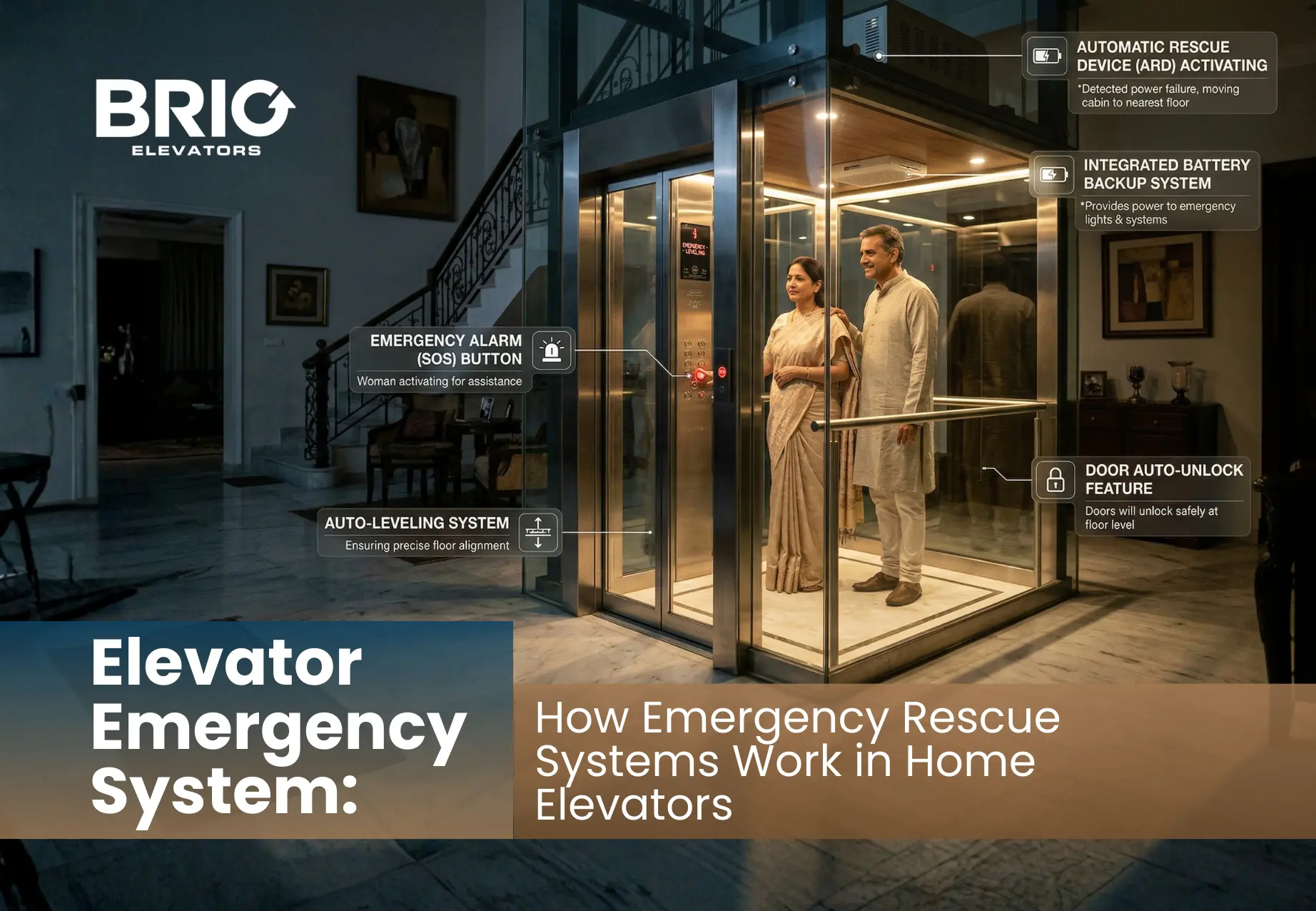
Let’s start with something real. Almost every homeowner who plans to install a lift has this one private worry: What if the lift stops and I’m inside it? Even if they love the idea of comfort and convenience, this question sits quietly in the back of their mind. That’s exactly why every modern home lift is built with an elevator emergency system. It’s not there as an extra feature. It’s there as protection you can rely on when something unexpected happens.
The good news is, today’s elevators are designed to respond like a trained professional calm, quick, and in control. They don’t leave you waiting and wondering. They act immediately. And most of the time, the situation is resolved before fear even has a chance to settle in.
When you use an elevator in a mall or office, you don’t think much about safety because you assume someone is around to help. But at home, it feels more personal. This lift is for your family. Your parents may use it when they’re alone. Your children may step inside without a second thought. That’s why the elevator emergency system is designed to work independently. It doesn’t rely on someone arriving to fix the problem. It solves the situation on its own.
This independence is what gives homeowners confidence. It’s not just about installing a lift. It’s about trusting it completely. And that trust comes from knowing the elevator is ready to protect the people who matter most to you.
Power cuts are unpredictable. They don’t send a warning before they happen. One moment everything is normal, and the next moment the lights go out. Years ago, this could mean being stuck inside a lift, feeling anxious and helpless. But that’s no longer the case.
A modern power failure rescue lift is designed to respond instantly. The moment electricity stops, the lift switches to its backup battery. You might feel a slight pause, but then something reassuring happens. The elevator slowly moves to the nearest floor and opens its doors.
You step out safely.
No panic.
No confusion.
The power failure rescue lift turns what could have been a frightening experience into something simple and manageable. Many people later say, “It wasn’t as scary as I thought it would be.”
That’s the power of thoughtful safety design.
There’s another important part of the rescue process called the emergency lowering device. Most homeowners never see it working, but it’s always ready in the background.
If the elevator senses a system fault, this feature gently brings the cabin down to a safe floor. It doesn’t rush. It doesn’t jerk. It moves in a calm and controlled way, protecting the passenger inside.
The emergency lowering device makes sure you’re never left suspended between floors, wondering what will happen next. It quietly finishes its job and lets you exit safely.
It’s the kind of feature you hope you’ll never need but feel grateful for when it’s there.
One of the most comforting things about modern lifts is that they don’t depend on you to fix the situation. The elevator emergency system is always monitoring the lift’s condition.
The moment it detects a problem, it takes action.
It moves the lift.
It opens the doors.
It brings you to safety.
All of this happens automatically.
This is especially reassuring for elderly users. They don’t need to remember emergency instructions. The lift protects them without asking them to do anything.
That quiet reliability builds deep trust over time.
Behind every safe rescue is a reliable battery. These batteries stay charged while the lift operates normally. The moment power fails, they step in and take control.
This is a critical part of residential lift safety, because it ensures the lift can complete its rescue even during a blackout.
Homeowners often imagine worst-case situations. But modern elevators are designed for exactly those moments. Proper residential lift safety standards ensure that backup power is always ready when needed.
This preparation is what makes modern home elevators dependable.
Even though rescue systems work quickly, communication tools add another layer of reassurance. Elevators include alarm buttons and intercom systems so passengers can alert family members if needed.
These home elevator safety features are not just about solving problems. They’re about helping people feel less alone in that moment.
Sometimes, just knowing you can call for help makes all the difference.
That’s why modern home elevator safety features focus on emotional comfort as much as physical safety.
They help people stay calm.
Every time you use your lift, sensors are working quietly in the background. They monitor speed, movement, and performance.
If something unusual happens, the elevator emergency system responds immediately.
Passengers may never notice these sensors.
But they are always there.
Always watching.
Always protecting.
This invisible safety is what makes modern elevators so reliable.
Once homeowners understand how these safety systems work, their mindset changes. The elevator stops feeling like a risk and starts feeling like a trusted part of the home.
Parents feel comfortable letting their children use it.
Elderly family members feel independent again.
Daily life becomes easier.
The elevator emergency system plays a huge role in creating that confidence.
It turns fear into trust.
A home elevator should never make you feel nervous. It should make your life easier, safer, and more comfortable.
Modern elevators are designed to protect you automatically. They respond quickly, guide you to safety, and make sure you’re never left helpless.
Most of the time, you won’t even notice these systems working.
But they’re always there.
Quietly protecting you and your family.
That’s the true purpose of an elevator emergency system.
If you’re planning to install a home elevator, don’t just focus on design. Focus on safety and reliability.
Choose a lift with advanced rescue systems, dependable backup power, and trusted protection.
Talk to our experts today and discover how a modern home elevator can bring comfort, confidence, and complete peace of mind to your family.
What is an elevator emergency system?
It is a built-in safety system that automatically brings the lift to a safe floor during emergencies.
Will I be stuck during a power cut?
No. A power failure rescue lift uses battery backup to help you exit safely.
What does an emergency lowering device do?
It gently lowers the lift to a floor if a technical problem occurs.
Are home elevators safe for elderly users?
Yes. Modern lifts include multiple safety systems designed for protection.
Do these safety systems work automatically?
Yes. They activate instantly without needing passenger action.