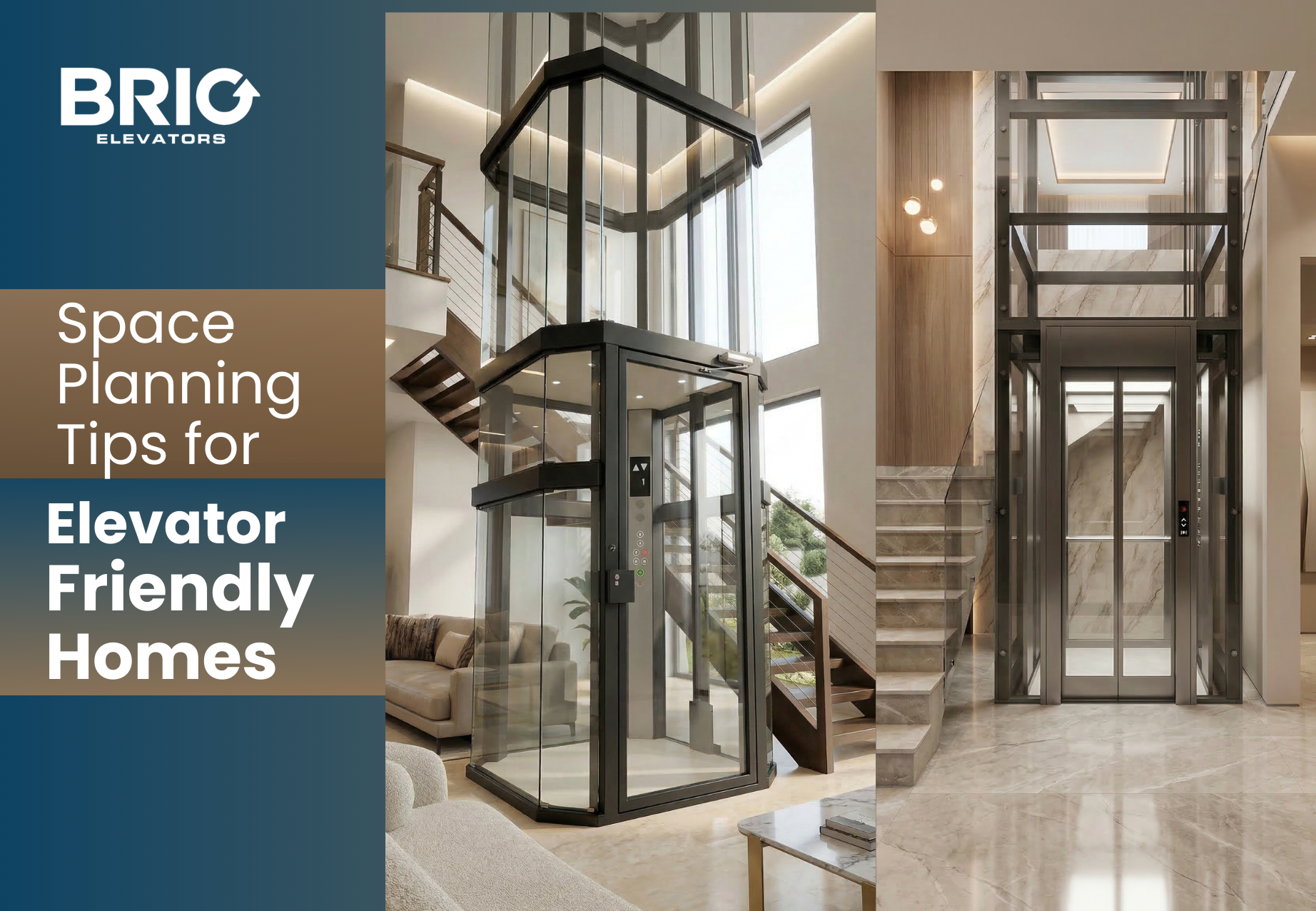
Space Planning Tips for Elevator-Friendly Homes
If you look at how homes are being designed today, one clear trend stands out. Houses are going vertical. Instead of spreading everything across one level, many families now prefer building upward with two or three floors.
This approach makes sense, especially in cities where land is limited. More floors mean more usable space without a bigger plot.
But there’s one small reality that comes with multi-storey living: stairs.
Many homeowners today are considering residential elevators as part of their home design. However, installing a lift in a house isn’t something that should be decided halfway through construction. One important step that makes everyone stop is elevator space planning.
When space for the lift is considered early in the design stage, the elevator becomes a natural part of the house rather than something that has to be forced into the layout later.
One of the most common situations architects face is homeowners asking about elevators after construction has already started.
At that point, structural walls are already built, floor openings are fixed, and changing the design becomes more complicated. Adding an elevator then may require adjustments that could have easily been avoided.
This is where elevator space planning becomes valuable.
When architects know from the beginning that the house may include a lift, they can allocate the required space in the layout itself. Structural supports, electrical connections, and floor openings can all be prepared in advance.
Planning early also helps maintain the visual balance of the house. Instead of adjusting rooms or reducing living space later, the elevator can be positioned in a way that fits naturally into the design.
Even homeowners who don’t plan to install a lift immediately often choose to leave space for one. It keeps the home flexible for the future.
A lot of people imagine elevators as large machines that require big areas inside the house. That used to be true years ago, but modern residential lifts are much more compact.
The minimum space home elevator requirement today is smaller than many homeowners expect. In fact, several lift systems are designed specifically for houses where space needs to be used efficiently.
When planning a minimum space home elevator, it’s important to look at the complete system rather than just the cabin size. Space is also needed for guide rails, door movement, and safety clearances.
This is why working with elevator experts during the planning stage can be helpful. They can evaluate the layout of the house and recommend a configuration that fits comfortably.
Often, the required space already exists in the design it simply needs to be planned correctly.
Another technical element that plays a major role in installation is the lift shaft size. The shaft is the vertical enclosure through which the elevator moves between floors.
Selecting the correct lift shaft size ensures the elevator operates smoothly and safely.
If the shaft is too small, installation may become difficult and the lift may not function efficiently. If it is unnecessarily large, it can occupy valuable interior space that could be used elsewhere.
Architects and engineers usually determine the shaft dimensions by considering several factors such as cabin size, door clearance, and structural support.
When the shaft is designed properly from the beginning, the elevator runs more smoothly and requires fewer adjustments during installation.
This is another reason why planning the shaft during construction is always easier than modifying the structure later.
Modern homes, especially in urban areas, often have limited space. Because of this, designing a practical small home elevator layout becomes important.
Instead of placing the elevator randomly, designers usually choose locations that naturally connect different floors.
For example, installing the elevator near the staircase is a common approach. Since staircases already act as vertical pathways within the house, placing the lift nearby keeps movement between floors organized.
Unused corners inside hallways or living areas can also work well for compact elevator installations.
Another option is placing the lift along an exterior wall, which sometimes simplifies structural work.
A carefully planned small home elevator layout helps the lift blend into the house without disrupting the overall flow of the interior.
Every house has its own layout and structural design, which means installing an elevator is never exactly the same process for every property.
This is why careful residential elevator planning is important.
One of the first things to consider is the number of floors the elevator will serve. Travel height and frequency of use both influence the type of lift system that works best.
The needs of the people living in the house also matter. If elderly family members will use the elevator regularly, features like wider doors and comfortable cabin space become important.
Safety is another essential aspect. Modern lifts usually include emergency alarms, backup power systems, and smooth start-stop technology.
Working with professionals during residential elevator planning helps ensure the lift fits the home properly while meeting safety standards.
Some homeowners prefer to install elevators only when they actually need them. Even in such cases, leaving space for a future lift during construction can be a smart decision.
Early elevator space planning allows the house to accommodate an elevator later without major structural changes.
By reserving the vertical space and aligning the structure correctly, homeowners keep the option open for the future.
If the need arises later, the installation process becomes much simpler.
Residential elevators today are designed to match modern interiors rather than stand out as bulky machines.
Cabin finishes, lighting, and materials can all be customized to suit the style of the house.
While aesthetics are important, reliability is still the top priority. Proper installation and high-quality components ensure smooth operation for years.
When thoughtful design meets effective elevator space planning, the result is a home that feels comfortable, accessible, and future-ready.
Multi-storey homes are becoming increasingly common, and elevators are gradually becoming a practical addition rather than a luxury feature.
With proper elevator space planning, homeowners can include lifts in their homes without sacrificing space or design. Understanding the minimum space home elevator requirements, choosing the correct lift shaft size, and designing a functional small home elevator layout are all important steps.
Careful residential elevator planning ensures the elevator operates safely while integrating smoothly into the home’s structure.
A well-designed elevator can make everyday living more convenient, especially in multi-level homes.
Brio Elevators works with homeowners and architects to design elevator solutions that fit modern residential spaces. From identifying the right location to selecting the most suitable system, our team ensures a smooth installation process.
Contact Brio Elevators today to explore elevator solutions designed for comfortable living.
FAQs
1. What is the minimum space required for a home elevator?
The minimum space home elevator requirement varies depending on the lift model, but many residential systems are designed for compact spaces.
2. How is lift shaft size determined?
The lift shaft size depends on cabin dimensions, door clearance, and the structural design of the building.
3. Can elevators be installed in small homes?
Yes. With proper elevator space planning, elevators can be integrated even into houses where space is limited.
4. Where is the best location for a home elevator?
Many homes install elevators near staircases, unused corners, or exterior walls where installation is easier.
5. Why is residential elevator planning important?
Proper residential elevator planning ensures safe installation, smooth performance, and better integration with the home’s layout.